AI: Supporting potential Applicants and Beneficiaries in a Changing Digital World
From making carbon copies on a typewriter to using artificial intelligence (AI) in our everyday work — technology has changed dramatically in a surprisingly short time.
So has the way we support potential applicants and project beneficiaries.
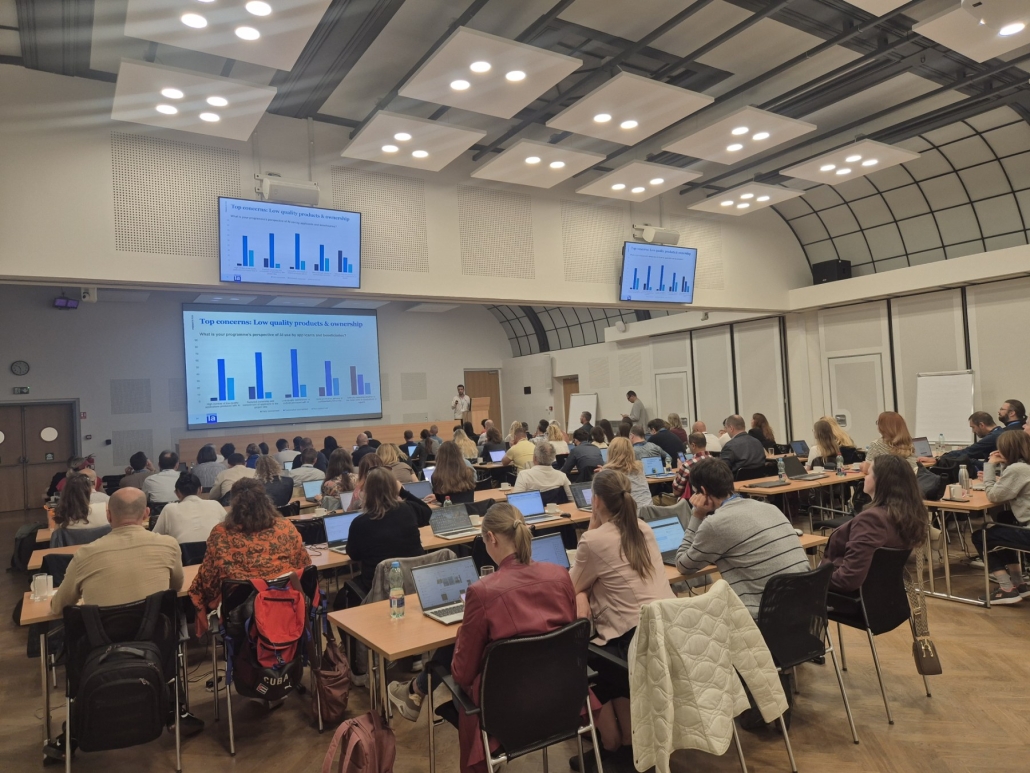
The “From Click to Call: AI in Action for Interreg” conference, organised by the Interact Programme, brought together practitioners from Interreg programmes from across the EU. Held in Prague on 30 September and 1 October 2026, the conference provided an opportunity to exchange experiences and discuss how AI is changing programme work.
Learning how AI can support Interreg work
The conference focused on both the opportunities and challenges that AI brings to Interreg programmes. Participants discussed responsible use of AI, AI-generated project proposals, programme analysis and the use of AI in communication and other everyday tasks.
One important discussion focused on guidance for applicants and beneficiaries. What should programmes encourage? What should they advise against? And where will additional guidance be needed as AI tools continue to develop?
For our programme, these questions are part of a broader approach to supporting applicants and beneficiaries throughout the project cycle.
Support starts before a project is approved
The programme provides potential applicants with information and practical support at different stages of the application process.
One example is the Project Cycle Management training, which we recently held in Kumanovo. The training helps potential applicants understand how to develop a strong project idea and turn it into a consistent project proposal.
In the context of AI, the message is straightforward:
We do not need nice essays. We need strong partnerships, alignment with programme priorities and objectives, and consistent documentation.
AI can support applicants in this process. However, it does not replace the substance of a good project idea or the responsibility of the organisations submitting it.
Partners will ultimately have to deliver what they have proposed and “promised” in their application, regardless of whether AI was used to prepare or refine the documents.
Supporting beneficiaries during implementation
Support continues after projects are approved.
The recent Project Implementation Workshop for grant beneficiaries provided another opportunity to emphasise an important principle: beneficiaries are responsible for everything they produce and present, whether it was created with AI, assisted by AI or prepared without it.
The same principle applies to the programme’s ongoing support through the JTS helpdesk facility. Beneficiaries can raise questions and seek clarification as they implement their projects, including questions related to the use of AI.
At the same time, using AI effectively requires more than access to a new tool. We need to understand what we want to achieve, where AI can add value and where human judgement must remain central.
The next step: guidance for future applicants
The next opportunity to address AI use will come with the publication of the next Call for Proposals.
The programme will use the kick-off event and information sessions to explain the requirements of the call to interested applicants. These activities will also provide an opportunity to address emerging questions about the responsible use of AI when developing project proposals.
In this way, AI becomes part of the programme’s wider commitment to provide clear information, practical guidance and continuous support to those preparing and implementing cross-border projects.
From carbon paper to AI
The conference in Prague confirmed one thing: AI is already becoming part of the way we work.
The question is therefore not simply whether we should use it, but where, how and under what conditions it can genuinely improve our work.
The tools will continue to evolve, and so will our programmes and working practices. Our role is not to fight the technology, but to understand it, set sensible boundaries and ensure that responsibility remains with the people who use it.
After all, if we can move from carbon paper to AI in just a few decades, we can probably learn to work with the new tools too.
The technology may change the way we work. It should not change the standards we work by.
#AI assisted text