EU Neighbours in action: Knowledge across borders
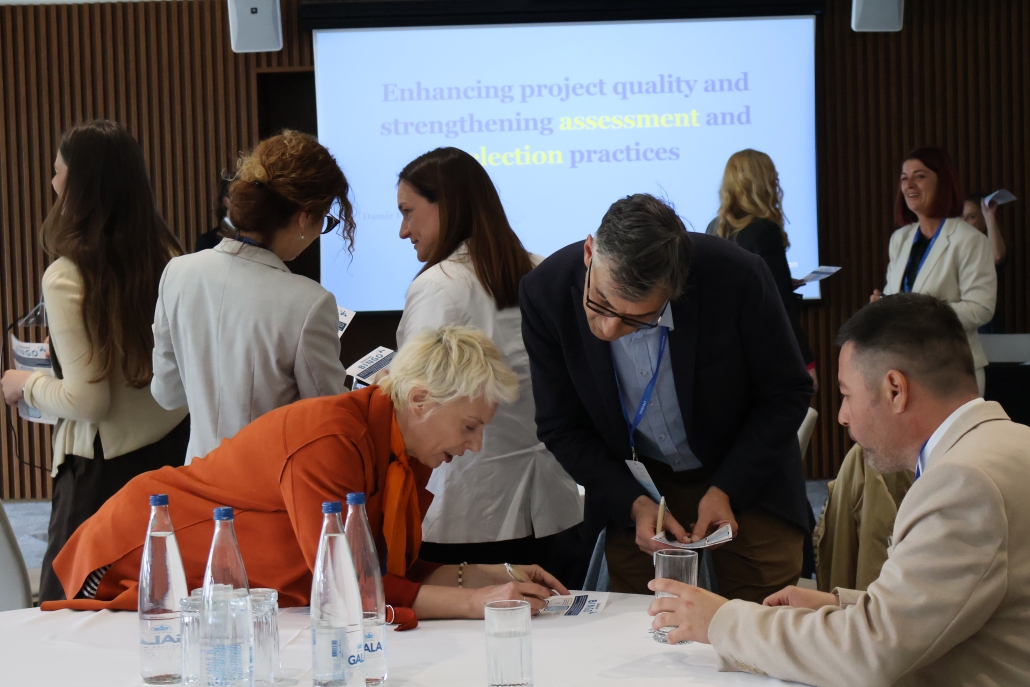
Interact brought together programme authorities and national stakeholders from EU Member States and candidate countries at the conference “EU Neighbours in action: Knowledge across borders”.
The overall impression was shaped not only by the richness of exchanged knowledge, but also by a strong readiness among participants to transform shared challenges into joint solutions.
The discussion centred on how cross-border cooperation can become a strategic asset for Europe and for the regions that experience it in practice every day. Participants reflected on this through several key statements:
“Without cooperation, the future would be unbearable”
“Problem does not stop at the border.”
“It is crucial for your life. It is crucial for your personal life.”
As Interact highlighted, the guiding question of the day was how cross-border cooperation can be further developed as a genuine strategic resource for Europe and its border regions. The programme featured six thematic sessions, combining workshops and discussions aimed at turning common challenges into practical solutions.
Cross-border cooperation was consistently framed as more than a funding instrument. It is a mechanism through which countries learn from each other, strengthen resilience, and contribute to a more cohesive and stronger Europe. The message was clear: challenges do not stop at borders, and neither does the effort to address them.
The second day of the conference further emphasised three key concepts: adaptability, flexibility, and resilience through cooperation. At the same time, it was underlined that the knowledge and experience already exist; the priority now is to create the enabling conditions for their full and effective use.
The second day in Belgrade focused on the future of cooperation beyond 2027. Building on the first day’s practical insights, discussions addressed how cooperation at Europe’s external borders should evolve in the coming programming period.
Two main questions framed the debate: how to enhance cooperation programmes in the next period, and how to shift from reactive crisis management towards the development of truly resilient programmes.
It was concluded that the challenges facing border regions are not diminishing but evolving, and that the effectiveness of future programmes will depend on the preparations made today.
Special thanks to Interact for the excellent organisation and substantive content of the event!